

Integrative Cancer Care
We start with you, the person who exists before the diagnosis.
A cancer diagnosis often brings a flood of information, decisions, and uncertainty. Whether someone is preparing for surgery, navigating chemotherapy or radiation therapy, or moving into survivorship, the challenges often extend beyond the diagnosis itself.
Cancer Care is More Than a Diagnosis
Conventional cancer care often focuses on understanding the disease itself. Diagnosis, staging, imaging, pathology reports, and treatment plans are all important parts of the process.
At SBCM, we look at how the body is functioning within the context of the diagnosis. Factors such as nutrition, immune function, inflammation, environmental exposures, symptoms, and overall resilience may all provide valuable information about the broader landscape of health.
We believe better decisions begin with a more complete understanding of the situation. That means looking not only at the disease, but also at the person experiencing it and the factors influencing their health and recovery.
The goal is simple: better data leads to better strategy, and better strategy creates the opportunity for better outcomes.

The Three
Domains of Curiosity
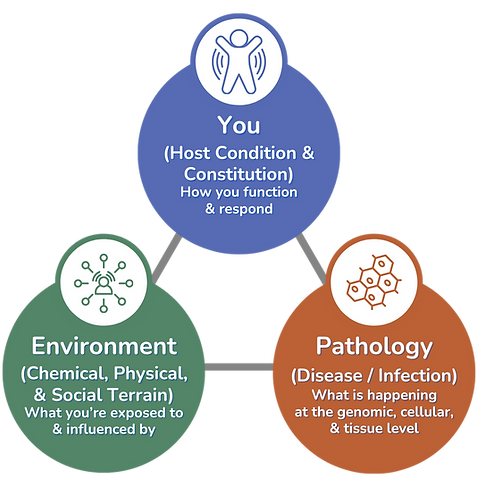
At SBCM, we use a simple framework to help organize complex health situations.
Cancer does not exist in isolation. Alongside the diagnosis itself, many factors contribute to health and recovery.
By looking at the person, their environment, and the pathology together, we can better understand how these different factors interact and influence one another over time.
A more complete understanding often leads to better questions, clearer priorities, and more thoughtful decisions.
A Collaborative Approach to Integrative Cancer Care
Integrative cancer care is not about replacing your oncology team.
It's about expanding the conversation.
At SBCM, we work alongside oncologists, primary care physicians, therapists, and other healthcare providers as part of a collaborative approach to care. Whether someone is newly diagnosed, actively undergoing treatment, or navigating recovery and survivorship, our role is to help make sense of a complex situation and identify what matters most.
By bringing together information from multiple sources, we can develop strategies with true precision and support decisions that are responsive to the individual's unique circumstances, goals, and evolving needs.
Who We Work With
Newly Diagnosed
Active Treatment
Recovery & Survivorship
What Integrative Oncology Support May Include
Integrative oncology combines conventional cancer treatment with evidence-informed supportive care designed to help patients navigate diagnosis, treatment, recovery, and survivorship.
Depending on the individual situation, care strategies may include:
• Functional medicine assessment and systems-based evaluation
• Advanced laboratory testing and clinical data review
• Custom herbal medicine and botanical support
• Nutrition and dietary guidance
• Lifestyle and resilience strategies
• Environmental health evaluation
• Support for treatment-related side effects
• Collaborative communication with the broader medical team
Every strategy is individualized and designed to complement, not replace, conventional oncology care. The goal is to help patients better understand the factors influencing their health while developing thoughtful, personalized strategies.
Working with
Oscar Sierra, L.Ac., RH

For more than fifteen years, Oscar Sierra has helped individuals navigate complex health conditions through a collaborative, systems-based approach to care. His work in integrative oncology and collaborative cancer care focuses on helping patients and families better understand the factors influencing health while developing thoughtful strategies that support them alongside conventional oncology treatment.
As a Certified Mederi Care Practitioner and founder of Sierra Botanica & Collaborative Medicine, Oscar combines functional medicine assessment, advanced laboratory analysis, nutrition, and custom herbal medicine within a framework designed to organize complex information and guide more personalized decision-making.
Whether someone is newly diagnosed, actively undergoing treatment, or navigating recovery and survivorship, the goal remains the same: helping people make sense of a challenging situation, identify what matters most, and move forward with greater clarity and confidence.